

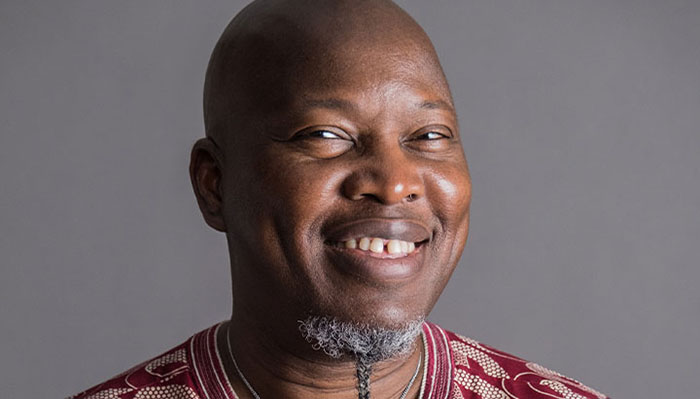
Prof Adedayo Yusuff, newly appointed DSI/NRF SARChI Chair in Power, Energy, Network and Optimisation at Unisa.
Africa's energy future cannot be shaped solely by tools and technologies developed elsewhere, according to Prof Adedayo Ademola Yusuff, the newly appointed DSI/NRF South African Research Chairs Initiative (SARChI) Chair in Power, Energy, Network and Optimisation at the University of South Africa (Unisa).
Yusuff, a full professor in Unisa's Department of Electrical and Smart Systems Engineering, says the research agenda goes beyond generating academic knowledge. It is about developing the tools, skills and expertise needed to help African countries understand their energy systems and make better decisions about their future.
At the centre of his work is the development of an open-source energy and power-systems modelling platform, alongside a programme focused on building human capacity in energy research.
For Yusuff, the ability to develop and control the tools used to understand energy systems is critical to Africa’s long-term development.
"He who makes your tools can limit your capacity and capability."
Energy modelling allows researchers and policymakers to test different scenarios before making decisions about electricity supply, investment, energy security and future demand.
However, many institutions in developing countries rely on proprietary software developed outside the Global South. The cost of licences can make these tools inaccessible to some researchers and students, while their design can also limit the types of questions researchers are able to explore.
Yusuff's research seeks to address both challenges by developing open-source tools that can be used for research and teaching while building the local expertise required to develop and improve them.
The approach is intended to strengthen Africa's ability to undertake its own energy modelling rather than relying exclusively on externally developed systems.
The research also considers the broader challenges facing energy systems, including energy security, the transition to cleaner energy and the need to expand electricity generation and infrastructure to meet future demand.
The work is not confined to computer models and university laboratories.
The Chair engages with industry and rural communities to better understand the realities of energy access, including the types of energy being used, patterns of consumption and the economic circumstances of communities.
Researchers conduct interviews and questionnaires in rural areas to examine energy use, the small and medium-sized businesses operating in those communities and their socio-economic conditions.
The information gathered can help researchers develop models that better reflect the relationship between energy access, economic activity and socio-economic development.
Yusuff says education, competency, production capabilities and exposure are central to addressing these challenges.
The approach also gives students and emerging researchers an opportunity to engage with real-world problems while developing the technical skills needed to undertake energy modelling and techno-economic analysis.
The research is ultimately intended to support better decision-making in both the public and private sectors.
Energy models can help policymakers and investors assess different scenarios and consider how investments, incentives and energy choices could affect energy security and future development.
Access to reliable and affordable energy is also closely linked to economic participation, particularly as more businesses, services and communities become dependent on digital technologies.
Yusuff's research considers how an environmentally sustainable energy mix could support the development of local manufacturing and supply chains, with potential implications for economic development and job creation.
The Chair also places significant emphasis on developing the next generation of researchers.
Young academics, including male and female researchers, are being mentored through the programme, while emerging researchers are given opportunities to co-supervise postgraduate students and contribute to peer-reviewed conference and journal publications.
The Chair also forms part of a wider network of partnerships with local and international institutions.
Through a grant involving Unisa, Stellenbosch University, the University of Cape Town and the University of the Western Cape, the institutions are establishing a Community of Practice in Sustainable Energy aimed at strengthening knowledge exchange and helping translate research into information that can be used by decision-makers.
Unisa already offers programmes covering areas including energy systems, power systems and project management, with specialisation in power engineering from honours through to doctoral level.
Yusuff says this provides a strong foundation for developing the skills required in energy and power-systems modelling.
"We need to develop tools that are relevant to the intellectual progression of our students and the advancement of our researchers’ capabilities."
The research aligns with Unisa’s energy catalytic niche area and contributes to Sustainable Development Goal 4, which focuses on inclusive and equitable quality education and lifelong learning.
For Yusuff, the longer-term objective is to ensure that African researchers and students are not simply users of technologies developed elsewhere, but can develop, adapt and improve the tools needed to address the continent’s own challenges.
The SARChI Chair therefore combines research, skills development and community engagement around a common objective: strengthening Africa’s capacity to understand and shape its own energy future.
* By Lesego Chiloane, Journalist, Department of Institutional Advancement
Publish date: 2026-08-26 00:00:00.0

 Unisa research chair seeks home-grown solutions for Africa's energy future
 Unisa African Music Festival puts indigenous music centre stage
 Unisa takes isiZulu to Russia as language programme gains ground at RUDN University
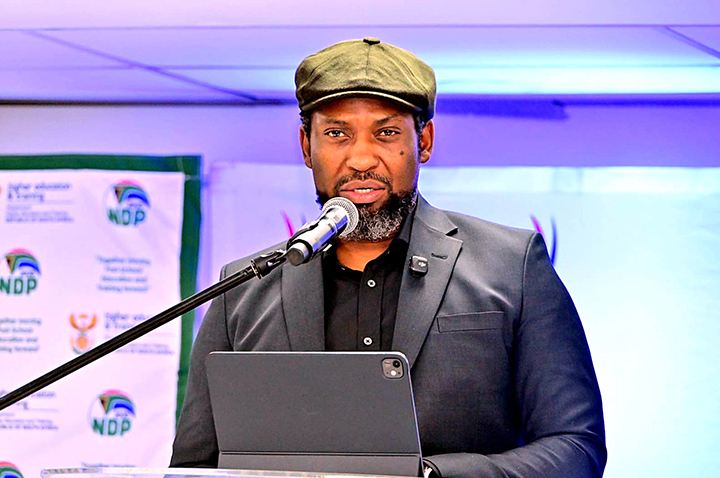 Minister Manamela calls for systemic reset of South Africa's PSET sector
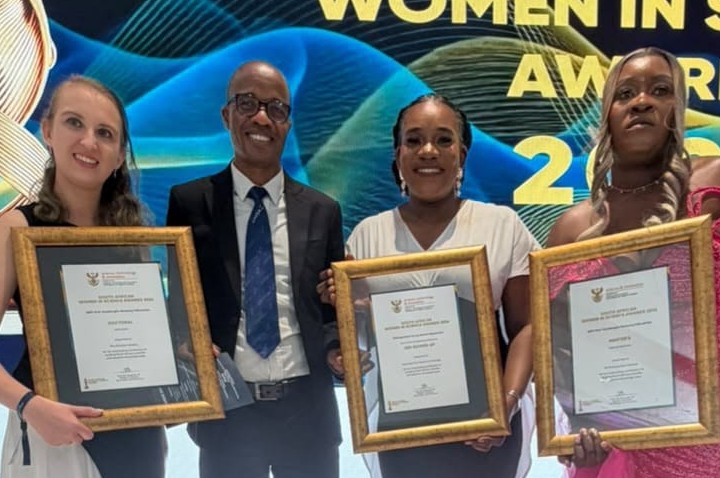 Three Unisa women putting science, research and innovation into action