

The African college of excellence in the social and human sciences
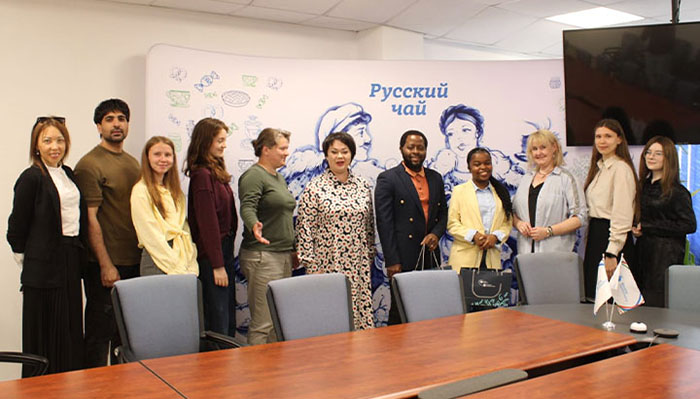
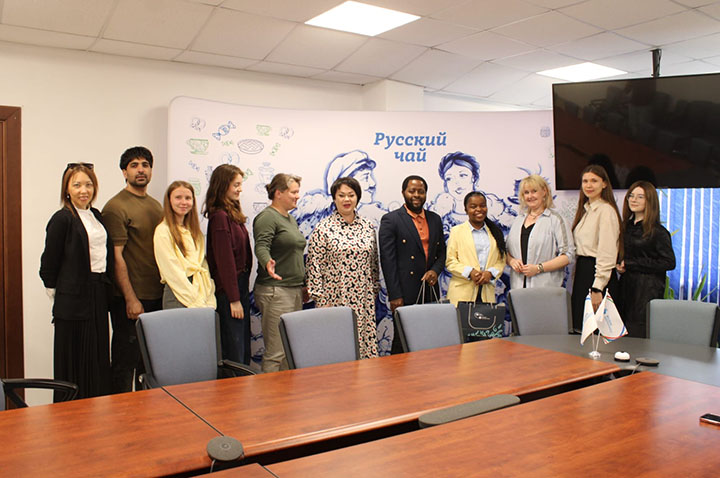
Representatives from Unisa, RUDN University and Tyumen University
The University of South Africa (Unisa) is taking isiZulu to an international audience through a new language programme that is strengthening its academic ties with Russian universities.
As part of its ongoing collaboration with Russian institutions, a team from Unisa recently travelled to Russia to deliver lessons in the Short Learning Programme (SLP) in Basic Communication Skills in isiZulu at RUDN University in Moscow and Tyumen University.
The programme, developed by Unisa's Department of African Languages, is designed to introduce students to the fundamentals of isiZulu, including pronunciation, grammar, communication skills and cultural contexts.
At RUDN University, Dr Erick Nzimande, a lecturer in the Department of African Languages, worked alongside Dr Dumisani Khumalo and Karabo Mafetsa from the Department of Linguistics and Modern Languages, as well as postgraduate student Nqobile Mazibuko. The team was deployed to deliver the 10-week programme through a blended learning model combining intensive face-to-face teaching with asynchronous online learning.
Nzimande said the team completed seven of the 10 planned units during the on-site component. These covered foundational isiZulu phonological features, basic grammatical structures, communicative competencies and cultural contexts.
The remaining three units, which focus on more advanced communication skills and specialised linguistic concepts, will be delivered online after the team visits Russia.
At Tyumen University, Khumalo delivered an intensive session to 32 students. The programme recorded an attendance rate of 94%, which the team said demonstrated the value of concentrated face-to-face instruction.
Although Russian academic institutions have traditionally favoured comprehensive in-person teaching, both Tyumen University and RUDN University recognised the value of a blended approach in this programme.
The model combines intensive classroom engagement with continued online learning, making it more practical given the geographical distance between South Africa and Russia.
Mafetsa said the programme had made a positive impact on students who consistently attended the lessons.
"By the end of the course, the Russian students had acquired basic communication skills in isiZulu," she said.
However, she noted that pronunciation presented a challenge for some students, particularly the distinctive click sounds in isiZulu and sounds such as "hl".
"This is another challenge which, we believe, could be addressed if more lessons were to be offered, to afford students sufficient time to practise pronunciation of isiZulu sounds," Mafetsa said.
The Unisa delegation also met with the RUDN University Director and the Dean of the Russian Language Department to discuss the future of the programme.

Natalia Dzida (Tyumen State University), Nqobile Mazibuko (Unisa) and Dr Dumisa Khumalo (Unisa)
During the meeting, university officials indicated that they were planning an expanded online isiZulu course that would run continuously throughout the year. The initiative would allow students to continue learning after the Unisa team returns to South Africa.
The RUDN representatives also indicated that they were exploring the possibility of having the isiZulu teaching team spend an entire semester in Russia. Such an arrangement would provide more time for classroom instruction and allow the programme to reach more students.
The two institutions are exploring financially viable options to support the proposed expansion.
The initiative reflects Unisa’s broader commitment to promoting African languages beyond South Africa and creating opportunities for international students to engage with African languages and cultures.
Prof Zethu Nkosi, Executive Dean of the College of Human Sciences, congratulated the team on successfully delivering the programme in Russia.
"Your initiative has significantly contributed to strengthening our partnership with Russian universities. Thank you for your dedication and for flying the Unisa flag high," Nkosi said.
The programme represents another step towards positioning isiZulu on the global academic stage while deepening educational links between South Africa and Russia.
* By Nnana Martina Jege, CHS: Communications and Marketing
Publish date: 2026-08-26 00:00:00.0

 Unisa research chair seeks home-grown solutions for Africa's energy future
 Unisa African Music Festival puts indigenous music centre stage
 Unisa takes isiZulu to Russia as language programme gains ground at RUDN University
 Minister Manamela calls for systemic reset of South Africa's PSET sector
 Three Unisa women putting science, research and innovation into action