

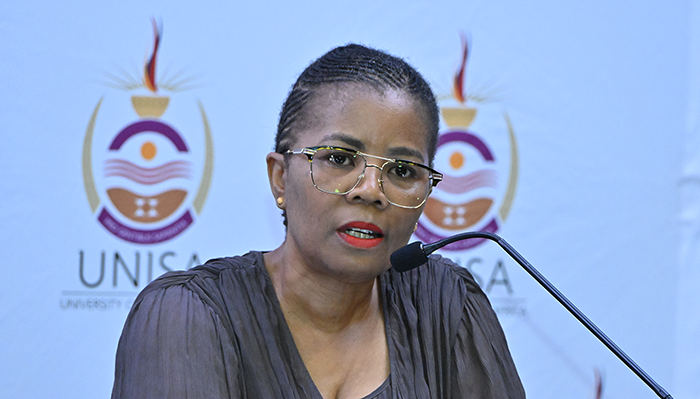
Prof Puleng LenkaBula, Unisa Principal and Vice-Chancellor, addressing delegates
Convening to discuss a student-centred strategy, Unisa’s senior management and academics are meeting at the Vice-Chancellor’s Lekgotla to align leadership, sharpen institutional commitments and accelerate performance. The two-day Lekgotla is taking place on 23 and 24 February 2026.
The Lekgotla is an annual strategic meeting designed to connect work to the bigger vision, assess progress, address challenges in higher education, and align operations with the Unisa 2030 Strategy and the United Nations’ Sustainable Development Goal 4, which is a commitment to ensure inclusive and equitable quality education and promote lifelong learning opportunities for all.
More than 260 delegates are contributing to significant, solution-driven engagements to reshape the academic project and achieve the envisioned quality of education. This year’s theme is Strategy Propulsion, Execution Architectures and Institutional Commitments. Discussions on the first day highlighted the importance of a shared purpose, synchronised actions, ethical stewardship and decision-making that balances innovation with stability.
The Lekgotla seeks to build on the outcomes of the Management Committee Lekgotla to propel the institution forward and pursue the strategic map for the period 2026–2030 to provide transformative education and reclaim its intellectual position as a leading African university.
Notably, this gathering reflected a broader shift in higher education governance, both locally and internationally. Universities are increasingly assessed not only on strategic ambition, but on their ability to deliver measurable outcomes – from student success and research impact to digital transformation and institutional resilience. Unisa is deliberately focusing this year on execution and institutional commitment, situated firmly within this evolving governance landscape, where performance is inseparable from leadership accountability.
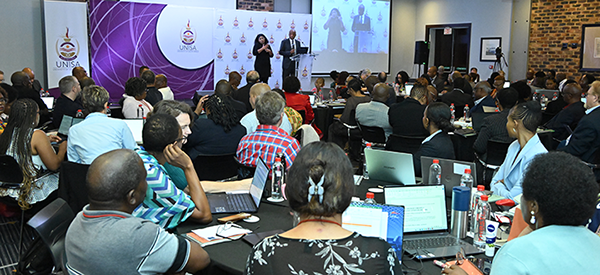
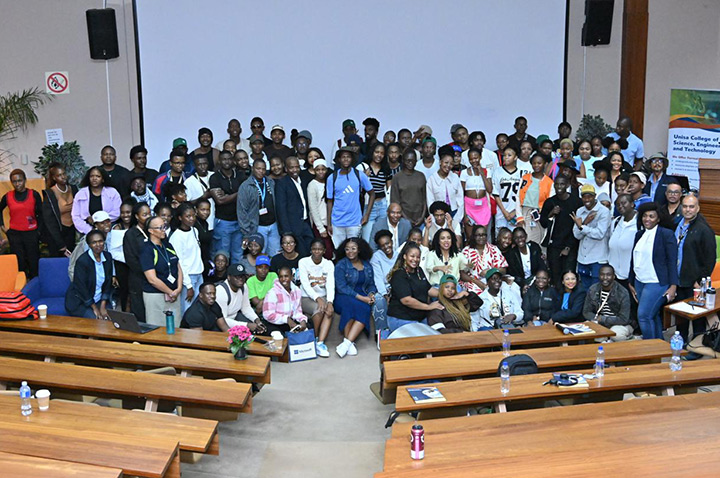
Delegates at the Lekgotla
In her opening remarks, Prof Puleng LenkaBula, Unisa Principal and Vice-Chancellor (VC), outlined the nature of the gathering as being both reflective and forward-looking. She introduced the university’s portfolio heads, who presented the university's achievements, progress, challenges and solutions, and new action plans. Their presentations focused on research and innovation, engaged scholarship, global impact, tech-mediated quality learning and teaching, strengthening student support services and resourcing the future.
Of importance, the VC observed Reverend Jesse Jackson’s passing by honouring his constant commitment to equality and human justice. Jackson was an American civil rights and LGBTQ+ rights activist, politician and ordained Baptist minister who, like many struggle heroes, fought for freedom. "The thought of him standing at the Lanseria International Airport, marching with striking workers, visiting political prisoners, and carrying the cries of Khayelitsha and Katlehong," noted VC, "echoed historic struggles for equality, and recalled moments associated with Martin Luther King Jr. and the global fight for justice."
She added: "The emancipatory project is the same everywhere among the oppressed, including in the context of our times." The VC further explained that today’s generation of activist leaders in postcolonial society pursues the same development objectives that Reverend Jackson and other struggle stalwarts pursued worldwide decades ago. "We need to pursue and continue as the struggle is the same as those of yesteryear," she said. "I strongly believe that in this complex and troubled world of plenty, peace, justice and happiness are attainable. However, universities must be at the centre of reimagining peace and justice, and of transforming our society, ensuring that the rich are not few and that those who live with dignity are many. I am hopeful that Unisa will be at the centre of the pursuit for justice, emancipatory knowledge and the praxis of our country."
The VC cautioned academics and professional staff to be attentive to student support and the university's local and global performance. She urged them to assess weaknesses, improve working methods, evaluate the effectiveness of consequence management, and develop new ideas and approaches to keep the university performing as expected while remaining adaptive to environmental changes. The VC also enjoined rated professors to mentor young academics. "Be a mentor, and make sure that young academics enjoy these opportunities," she concluded.
Morailane Morailane, programme director facilitating the Lekgotla, said the gathering comes at a critical moment for the university, with the conclusion of the successful 2021–2025 strategic cycle and the start of a new five-year term under the leadership of the VC. "The transition," he said, "is deliberate and calls for both reflection and decisive action."
Panellists Nombulelo Sesi Nxesi, Chief Executive Officer of the Education, Training and Development Practices Sector Education and Training Authority (ETDP SETA), and Khathutshelo Innocent Sirovha, Chief Executive Officer of the Agricultural Sector Education Training Authority (AgriSETA), echoed many of the concerns raised during the first day, particularly around execution gaps and the need for more substantial institutional alignment.
Beyond strategy, discussions highlighted the central role of leadership culture in shaping institutional performance. In a higher education environment that demands responsiveness, inclusivity and financial sustainability, leadership alignment emerged as a strategic necessity rather than an abstract ideal.
The first day of the Lekgotla was dedicated to structured introspection, focusing on collectively identifying the key challenges that have impeded institutional performance. The emphasis was on isolating the root causes of these challenges through a shared and evidence-based understanding, thereby enabling clarity on the systemic, structural and operational factors that require decisive intervention.
* By Lesego Chiloane, Journalist, Department of Institutional Advancement
** Photography by Shooheima Champion, Multimedia Centre
Publish date: 2026-02-24 00:00:00.0
 Thought leader in research recognised for excellence
 Unisa hosts successful Library Week public lecture
 Unisa PhD candidate appointed to the FASSET Board
 Unisa connects academia and industry at career day
 Unisa pays tribute to iconic civil rights activist