

The African college of excellence in the social and human sciences
Adopted in 2012 the National Development Plan (NDP) 2030 claims that the transition from apartheid to democracy has been peaceful, however, if you are a black woman in this country, you will know that this is not a true reflection of South Africa.
 This is the sentiment echoed by sociology expert, Dr Nokuthula Mazibuko from the University of South Africa who recently critiqued the NDP based on her research on domestic violence in Mamelodi Township, South Africa. She says that there is a missing element in the NDP, one that deals directly with violence against women and children.
“There is no stand-alone chapter with clear objectives and measurables that speak on how we will combat this violence. This violence is not something that should only be dealt with as a side issue of other challenges and social ills facing the country. While its causes are interlinked, it does exist independently of poverty and inequality and therefore needs to be directly addressed in the NDP.”
According to Dr Mazibuko the legacy of apartheid has fuelled the problem of violence against women and children in the context of a strongly patriarchal community. “Part of the blame for violence against women is an alleged culture of violence in South Africa, within which violence is accepted as a way to resolve disputes, even in the post-apartheid era.
“South African scholars continue to emphasise that domestic violence stems from a desire to exert power and control over women, but this falls under the rubric of a culture of violence entrenched in traditional communities,” she said.
She elaborated that domestic violence and injuries are the second leading cause of death in South Africa. Therefore, in her critique of the plan’s aims to eliminate poverty and reduce inequality by 2030 in South Africa, she said the South African government should identify ways to reduce domestic violence and injuries as a key goal, and to develop and implement a comprehensive, national, intersectoral, evidence-based action plan.
“As an activist of no violence against women and children, I would have expected a standalone chapter on the NDP 2030 of this scourge that is disabling South African communities. The plan must envision a South Africa where women and children feel free to be alive, where there is no fear of being raped by a stranger or known person; being attacked or assaulted; or being murdered by those whom they love and claimed to be loved by in return; and instead have their copse set alight.”
Dr Mazibuko said that contained within the NDP 2030 is a Commission Diagnostic Report which was released in June 2011. This report identified gaps within the NDP and its failure to implement policies. Therefore, nine primary challenges were set out. “However, I am saying that there is a tenth challenge that is still missing in the NDP 2030 which should be a national priority, and that is the widespread violence against women and children in South Africa.”
She continued: “Domestic violence and sexual violence are still pervasive in South Africa, and women continue to live under the threat of violence and to experience violence. “
Listing statistics that speak to this, she said in 1998, there was an identification of a lifetime prevalence of domestic violence of 25% in comparison with the 1997 prevalence of 10% of South Africa’s deaths due to injuries caused by domestic violence. In 1999 in South Africa, one woman was killed every six hours by her male intimate partner. A decade later, in 2009 when this study was repeated, a slight decrease was found compared to the 1999 rate. The 2009 rate of femicide in South Africa stood at one woman being killed by her intimate male partner every eight hours.
The situation will remain bleak according to Dr Mazibuko, if eliminating this form of violence is not prioritised by the government. “Currently one in four women in South Africa is a survivor of domestic violence and femicide statistics in South Africa are alarmingly high. In 2019, we can estimate that the number would return to one woman being killed every six hours since combatting violence against women is not viewed as a sense of urgency. We can have many programmes, but I believe that if we do not have a dedicated plan, a vigilant policing unit and harsher laws, we will not win this battle and our women and children will continue to live in fear and remain at risk.”
Publish date: 2017-08-28 00:00:00.0
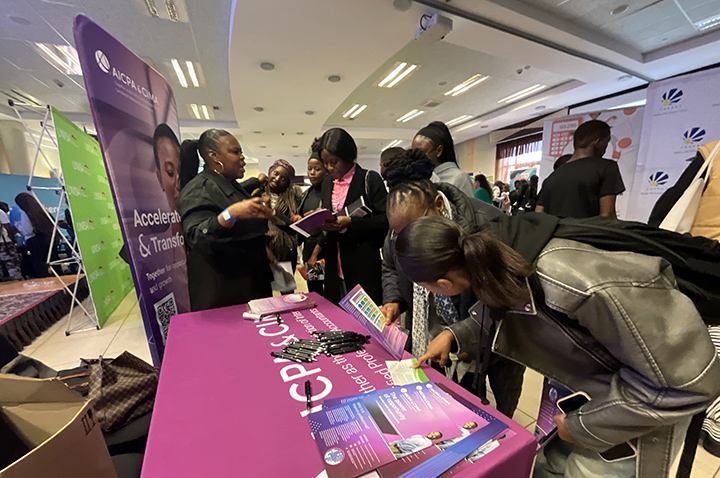 Accounting Career Day inspires future professionals at Unisa
 Unisa celebrates World IP Day 2026
 When resilience meets purpose
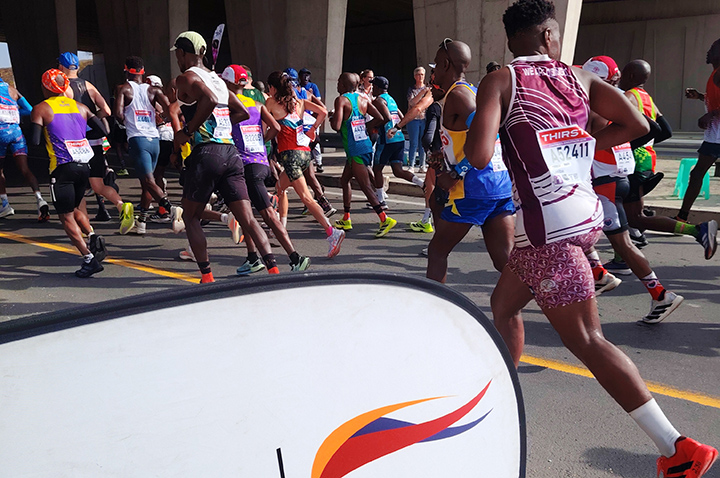 Unisans shine at the tough up-run 2026 Comrades Marathon
 CRDB Bank CEO earns PhD from Unisa