
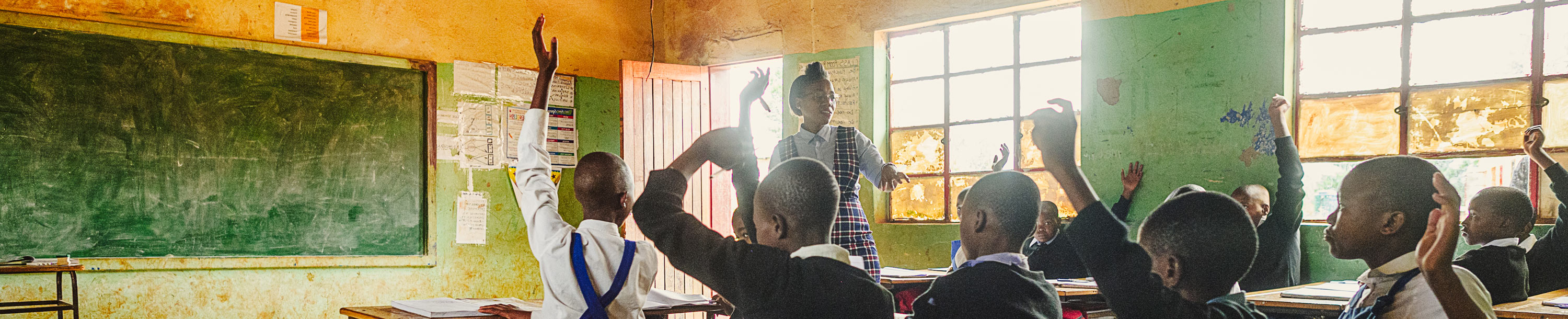
Producing over 40% of teachers in South Africa
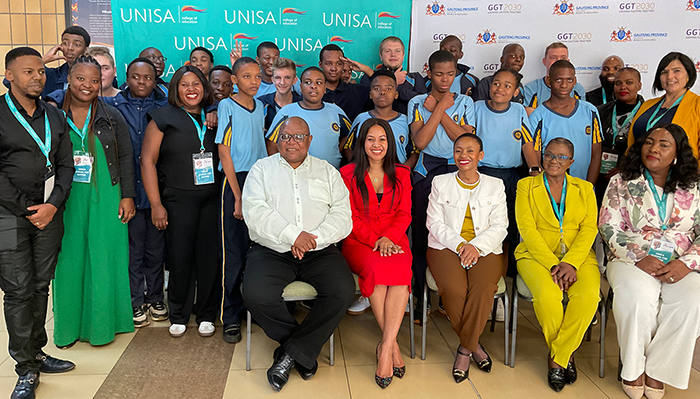
Pictured here with learners and teachers from UNICA are, front from left, Prof Reginald Monyai, Head of Research and Graduate Studies, College of Education; Humile Mashatile, spouse of the Deputy President of South Africa; Mathabo Nakene-Mginqi, Vice-Principal: Information and Communication Technology; Prof Jacomina Motitswe, Chair of the Department of Inclusive Education; and Dr Rabella Mhlaba-Maluleke, Principal of UNICA
The University of South Africa (Unisa) marked World Autism Awareness and Acceptance Month with a landmark seminar that brought together government leaders, academics, advocates, parents and autistic individuals under the theme "Autism and Humanity: Every Life Has Value". The seminar, held on 29 April 2026, underscored a collective call to move beyond awareness toward meaningful inclusion, dignity and social justice for autistic and neurodiverse people.
The emphasis was on creating a safe and inclusive space, mindful of sensory sensitivities, with noise-reduction measures such as silent applause. The tone of empathy and respect set the stage for a day focused on lived experience, policy commitments and required practical changes.
One of the most moving moments of the seminar came from a delivery by Dutch soprano Amira Willigagen, who sang the national anthem and later performed an aria dedicated to people who have been underestimated because they are different. She shared her family’s journey with her neurodiverse brother, highlighting how belief, support and inclusive education enabled him to excel academically and professionally. Her message reinforced a central theme of the seminar: difference should never be mistaken for limitation.
Delivering the official welcome, Mathabo Nakene-Mginqi, Vice-Principal: Information and Communication Technology, reaffirmed Unisa’s commitment to inclusive education. She described inclusion not as a peripheral concern but as central to the university’s mandate as the largest open distance learning institution on the African continent.
Nakene-Mginqi acknowledged progress while candidly admitting that systemic barriers persist for students with disabilities, particularly autistic and neurodiverse students. She called for inclusive systems, accessible learning environments and genuine transformation rooted in the principle "Nothing about us without us".
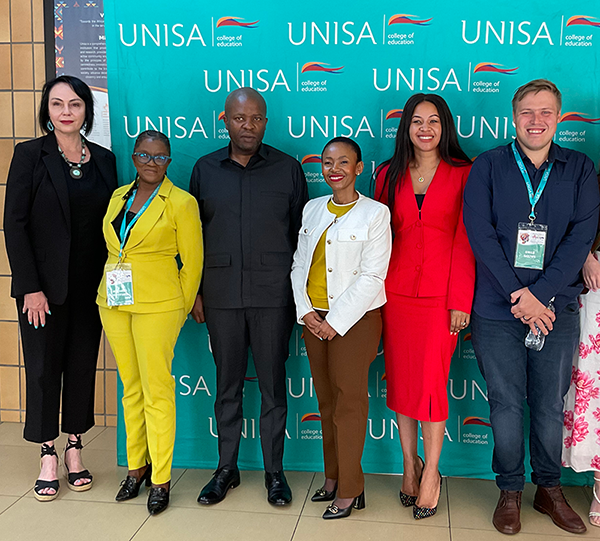
From left: Rachel Tambo, Prof Jacomina Motitswe, Lebogang Maile, Mathabo Nakene-Mginqi, Humile Mashatile and Dr Emile Gouws
Lebohang Maile, Gauteng MEC for Education, addressed the seminar despite pressing cabinet commitments. He framed autism acceptance within South Africa’s broader reflections on Freedom Month. He highlighted research gaps, particularly the imbalance between the Global North and the Global South. He announced provincial initiatives, including autism-specific schools, resource centres, parent training programmes and the launch of Africa-centred neurodiversity research platforms.
Rachel Tambo, Chairperson of Autism South Africa and mother of a non-speaking autistic teenager, spoke candidly as a parent. She described daily struggles with stigma, inaccessible public spaces, inadequate healthcare responses and limited post-school pathways for autistic young people. Her story illustrated how misunderstanding can escalate into harm and how communication differences are too often equated with a lack of intelligence.
Tambo challenged institutions to prepare for autistic adulthood, not just childhood, and asked society a difficult question: whether the world is willing to make space for autistic people.
Humile Mashatile, spouse of the Deputy President of South Africa and co-founder of the Paul & Humile Mashatile Foundation, focused on initiatives such as support for autistic children. As the mother of an autistic child, she spoke about Ubuntu as a lived responsibility, particularly for families navigating autism with limited resources. Highlighting a recent autism-focused career fair, she stressed the need to redesign education-to-employment pathways that recognise neurodiverse strengths rather than exclude them through rigid systems.
The seminar concluded on an uplifting note. Youngsters of UNICA, a school for learners with autism spectrum disorder, delivered amazing musical performances, drawing a standing ovation through raised hands rather than applause. Their presence served as a reminder that autistic voices and talents must be centred in discussions about autism.
A consistent message had emerged: awareness alone is no longer enough. The World Autism Awareness and Acceptance Seminar positioned inclusion as a moral imperative and a shared responsibility, challenging institutions and society at large to translate dialogue into sustained action because, as repeatedly affirmed throughout the programme, "every life has value".
* By Freddy Abilio Mlambo, Marketing and Communication Specialist, College of Education
Publish date: 2026-05-15 00:00:00.0
 Wearing her achievement with pride
 Unisa shines as four academics reach the finals of South Africa's prestigious 'Science Oscars'
 Breaking barriers through RPL
 Why Generation Z is choosing Unisa for flexible learning
 The long run to leadership: an MBL graduate's story of grit and achievement