


Leslie Sedibe, Daniella de Figueiredo and Khangwelo Rathogwa
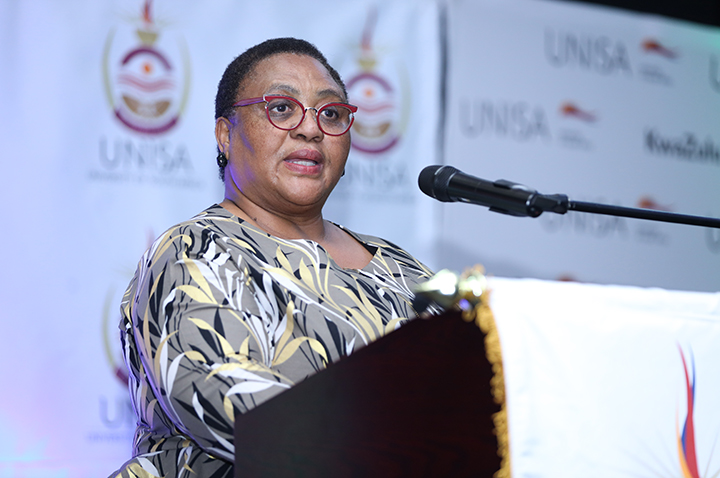
The Directorate of Innovation, Technology Transfer and Commercialisation (DITTC) successfully hosted Unisa’s celebration of World IP Day 2026 as part of the university's Research and Innovation Week. The event brought together IP industry stakeholders under the theme "IP and Sports in the Digital Era".
The event also formed part of the global World Intellectual Property Day celebrations, with the theme "IP & Sports: Ready, Set, Innovate". The global celebrations explored how intellectual property continues to shape the future of sport and the digital economy.
Opening the event, representatives from the DITTC highlighted the directorate's role in supporting researchers, innovators and entrepreneurs in protecting and commercialising intellectual property generated within the university and beyond. The discussions reinforced the importance of intellectual property as a key driver of economic growth for societal impact.
Unisa’s celebration of World IP Day also served as a reminder that intellectual property extends far beyond patents and legal protections. It is a strategic asset that enables athletes and organisations to generate value from their ideas while contributing to broader economic development.
The first keynote address was delivered by Leslie Sedibe, Chief Executive Officer of Leslie Sedibe Inc Attorneys, who unpacked the fundamentals of intellectual property rights within the sports industry.
"We will focus our attention on the IP world, with a special focus on global sport and what it means for us in Africa," said Sedibe. "When I was the CEO of Proudly South African, I had to come up with what I regarded as an elevator pitch on what it means to be Proudly South African, and I used the acronym P.R.I.D.E."
He explained: "P stands for Patriotism. We need to be patriotic about South Africa. R stands for Re-industrialisation. We need to turn our country into an industrial base instead of simply exporting our resources. I stands for Innovation. We need to become a nation of innovators. D stands for Domestic consumption. We need to support domestic trade and support one another as a nation. E stands for Entrepreneurship. All of this, and everything we do, ultimately comes down to how we manage and protect our intellectual property."
Drawing on real-world examples from the sporting sector, Sedibe explored how trademarks, copyright, image rights, branding, sponsorships and commercial agreements underpin the modern sports industry. He challenged attendees to think beyond the legal dimensions of intellectual property and consider how IP can be strategically leveraged to create sustainable economic value.
Using examples from professional sport and athlete branding, he demonstrated how successful sporting organisations recognise intellectual property as a valuable asset that can be protected and commercialised.
A key message throughout his presentation was the need for innovators to adopt an entrepreneurial mindset. He encouraged attendees to view intellectual property not merely as a legal safeguard but as a tool for unlocking commercial opportunities, attracting investment and creating impact.
Sedibe also unpacked lesser-known aspects of sports-related intellectual property, including image rights and the evolving complexities surrounding the ownership of sporting performances, digital content and athlete brands. His presentation sparked lively discussion among attendees, particularly about how innovators and entrepreneurs can better position themselves to capture the value they create.
Concluding his address, he reminded participants that innovation should ultimately serve society and contribute to community development. "When you make it, for goodness' sake, remember the community that you come from. Always remember where you come from," he said.
The second keynote was delivered by Daniella de Figueiredo, attorney and associate in the Corporate and Commercial Department at Adams & Adams.
Her presentation focused on the growing intersection between sport, technology and intellectual property in the digital age. She provided attendees with a practical overview of the key forms of intellectual property protection, including copyright, trademarks, patents, designs and trade secrets, before demonstrating how these rights are applied within the sports industry.
Through examples involving major sporting brands, she illustrated how intellectual property has become central to the commercial success of modern sport.
A particularly valuable aspect of her presentation was her explanation of licensing, highlighting that ownership of intellectual property remains with the creator or rights holder. In contrast, others are granted permission to use it under agreed conditions.
Her presentation demonstrated that while technology continues to create exciting new opportunities for innovation, it also requires rights holders to become more proactive in protecting and managing their intellectual property assets.
One of the highlights of the event was the interactive engagement between speakers and attendees. The question-and-answer sessions sparked robust discussions on practical issues facing innovators and entrepreneurs.
The conversations highlighted the need for innovators to understand intellectual property from the earliest stages of development and to view IP protection as an integral part of building a sustainable and competitive business.
Closing the event, DITTC's Technology Transfer Officer, Khangwelo Rathogwa, thanked participants for their engagement and encouraged innovators, researchers and students to make use of the support available through the DITTC.
He highlighted the directorate's role in assisting innovators with intellectual property protection, technology transfer, commercialisation and innovation support services, reinforcing Unisa’s commitment to translating ideas into real-world impact.
Unisa’s celebration of World IP Day 2026 successfully demonstrated the critical role intellectual property plays in the sports industry and beyond. By using real-world examples, the event gave attendees a deeper understanding of how intellectual property can protect innovation and drive economic growth.
As technology continues to reshape industries across the globe, the conversations held during World IP Day 2026 reinforced an important message: innovation has value, and protecting that value is essential for creating lasting impact.
* By Matshego Njumbuxa, Communication and Marketing Specialist, Directorate of Innovation, Technology Transfer and Commercialisation
Publish date: 2026-06-19 00:00:00.0
 Lesetja Kganyago: 'South Africa's economy has stabilised. But where is the growth?'
 From Unisa to Hungary: How Sizakele Nkosi turned determination into a global opportunity
 Too few vets, too many outbreaks: South Africa's FMD challenge
 Unisa sparks critical conversation on South Africa's unfinished land question
 From Unisa graduate to global fraud intelligence investigator