
Equipped with state-of-the-art laboratories that provide students with hands-on experiences to bridge theory and practice
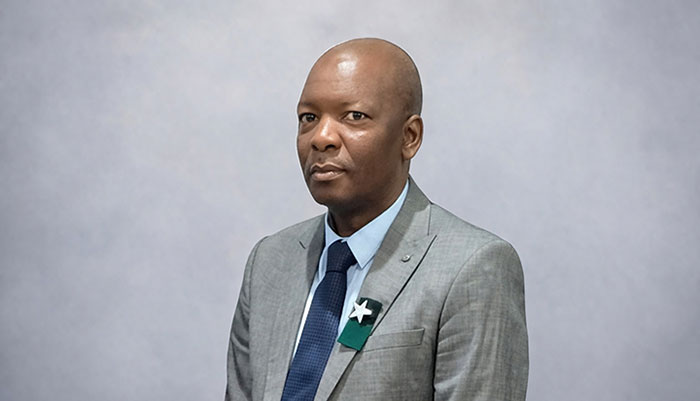
Prof Tlou Julius Tjelele
Unisa’s College of Agriculture and Environmental Sciences (CAES) proudly congratulates Prof Tlou Julius Tjelele, a specialist in rangeland and pasture science in the Department of Animal Health and Agriculture, on the approval of the Bush Encroachment Research Chair.
The chair, funded by the Department of Agriculture, Land Reform and Rural Development and the Agricultural Research Council, has secured R5 million with additional co-funding through the catalytic niche areas consortium, bringing the total investment to R10 million over a period of three years (2026–2029).
This prestigious research chair forms part of the Cluster of Excellence for Integrated Rangeland Systems, a national initiative aimed at strengthening resilient rangeland ecosystems that support sustainable livestock production and rural livelihoods in South Africa and beyond.
Rangelands, which cover approximately 80% of South Africa’s terrestrial area, play a vital role in supporting ecological balance, economic activity and community livelihoods. However, these ecosystems are increasingly under threat due to bush encroachment, a rapid expansion of woody plant species in grassland and savanna systems.
This phenomenon is driven by a combination of factors, including overgrazing, climate change and fire suppression, and has significant consequences for ecosystem functioning. Bush encroachment reduces forage availability, degrades soil quality and limits livestock productivity, placing additional strain on already vulnerable communities, particularly in resource-constrained rural areas.
Under Tjelele’s leadership, the Bush Encroachment Research Chair will establish a multidisciplinary research platform that integrates scientific, indigenous and community knowledge systems. The programme will draw on expertise across a wide range of disciplines, including
Key research focus areas will include
Beyond research, the chair will play a critical role in capacity building and human capital development, supporting the training of honours, master’s and doctoral students (a total of 20), as well as six postdoctoral fellows. It will also foster research networks and strengthen collaboration across institutions and sectors, including, but not limited to local universities, the Department of Agriculture, Land Reform and Rural Development (both provincially and nationally), the University of Namibia, the National Agricultural Research and Development Institute in Botswana, the University of Nebraska Lincoln, the University of Reading and the North Dakota State University.
Reflecting on this achievement, Tjelele notes: "This programme provides a strategic opportunity to advance high-quality research in rangeland science at a national scale, addressing key priorities aligned with Unisa’s catalytic niche areas, the National Development Plan, Africa Agenda 2063, and the United Nations’ Sustainable Development Goals." He adds: "It will further contribute to human capital development and strengthen thought leadership that is fit for purpose in rangeland ecology and management."
The establishment of the Bush Encroachment Research Chair marks a significant milestone for CAES, reinforcing its commitment to research excellence, sustainability, and societal impact.
* By Gugu Masinga, Marketing and Communications Specialist, College of Agriculture and Environmental Sciences
Publish date: 2026-04-14 00:00:00.0

 Unisa research chair seeks home-grown solutions for Africa's energy future
 Unisa African Music Festival puts indigenous music centre stage
 Unisa takes isiZulu to Russia as language programme gains ground at RUDN University
 Minister Manamela calls for systemic reset of South Africa's PSET sector
 Three Unisa women putting science, research and innovation into action