News & Events
Unisa Innovation Challenge alumnus drives sanitation innovation in Namibia
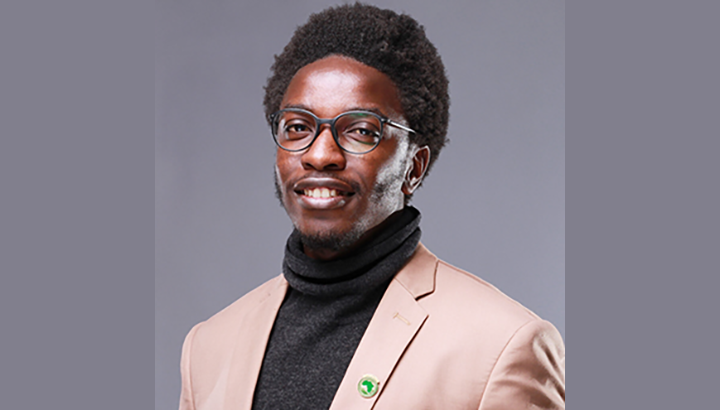
Kaveto Tjatjara, Founder of Flushh and social entrepreneur
For many people, access to safe sanitation is something they rarely think about. But for millions across Africa, it remains one of the biggest daily challenges affecting quality of life. For Namibian social entrepreneur and founder of Flushh, Kaveto Tjatjara, the issue became deeply personal during a visit to his grandmother’s village years ago.
After spending years away from the village, Tjatjara returned home to visit his grandmother, where the family prepared a traditional welcome celebration. But as the evening approached, his grandmother warned him to stop eating because if he needed the toilet later, he would have to use the bush. That moment stayed with him.
At the time, more than half of Namibia’s population still lacked access to safe and adequate sanitation.
“In many underserved communities, such as Tjova village, where my grandmother lived, conventional sanitation systems were too expensive to build or inaccessible,” Tjatjara explains.
Instead of accepting it as normal, he started asking questions such as what kind of solution could realistically work in places facing water shortages and limited infrastructure.
That curiosity eventually became the foundation of Flushh.
Building Flushh from the ground up
Before building anything, Tjatjara spent nearly two years researching sanitation challenges in underserved communities. He spoke with residents, studied existing systems, and sought to understand why many solutions never lasted in the long term.
What became clear quickly was that traditional sanitation systems were often too expensive or difficult to maintain in remote communities. Namibia’s harsh climate and ongoing water scarcity made the challenge even more complicated.
That led to the creation of Flushh, a climate-resilient, waterless sanitation solution designed specifically for underserved communities.
“At Flushh, we provide waterless sanitation systems through a sanitation-as-a-service model,” Tjatjara explains. “We install eco-toilets and provide ongoing waste collection, maintenance, and safe waste processing services.”
The toilets are lightweight, portable, and built using locally sourced and recycled materials. Instead of flushing with water, users flush with sawdust, a carbon-rich material that neutralises waste naturally and helps eliminate odours.
The toilets also include solar-powered lighting and charging points, making them safer and more practical for households without reliable electricity.
What makes the model particularly relevant for countries like Namibia is that it solves several problems at once. Besides improving sanitation access, each toilet saves thousands of litres of water annually, an important factor in one of the driest countries in Africa.
More than just toilets
“The problem we are solving is much bigger than toilets,” Tjatjara says. “We are addressing sanitation inequality, water scarcity, environmental contamination, and public health challenges that disproportionately affect low-income communities.”
In many communities, families still rely on unsafe pit latrines or open defecation. Besides the obvious hygiene concerns, pit latrines can contaminate underground water sources and pose serious dangers to children. For women and girls, the risks are often even greater.
Tjatjara speaks about the fear many women experience when walking long distances at night to use the bush, particularly in areas where gender-based violence remains a reality.
“With our toilet, it’s right at their home,” he explains. “They have a safe space. It is clean, reliable, and dignified.”
The environmental side of the business is equally important. Flushh collects household waste every two weeks and processes it into compost and biochar, helping create a circular waste recovery system rather than simply disposing of it.
Even the sawdust used in the toilets comes from local carpenters and bush-clearing initiatives, turning another waste stream into a useful resource.
Growing across Namibia
Although Flushh is still relatively young, the impact has already started spreading across Namibia. The company currently services households, schools, weddings, funerals, festivals, and other community events, reaching more than 28,000 people so far. One of the company’s biggest areas of focus now is schools.
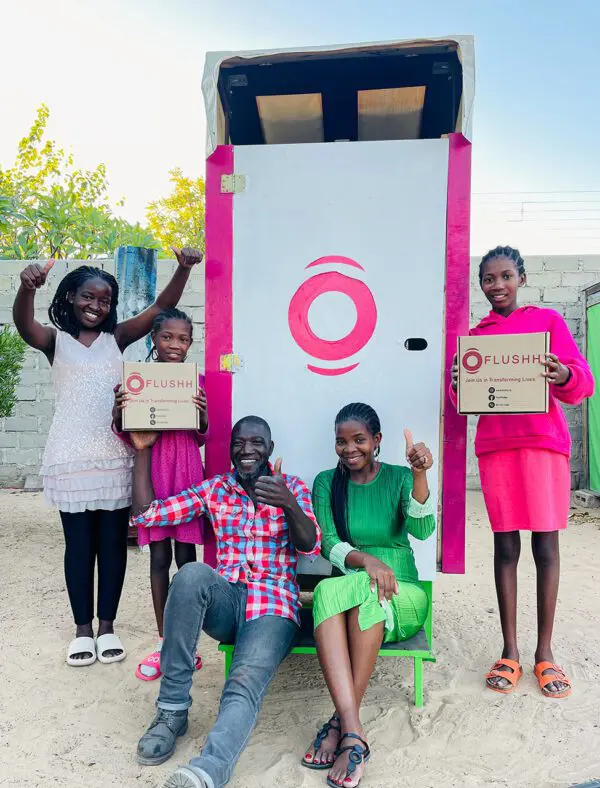
A Namibian family with their Flushh unit
Tjatjara believes that improving sanitation in schools can have a direct impact on educational outcomes, particularly for young girls who often miss school due to inadequate sanitation facilities.
“Our vision is to build climate-resilient sanitation infrastructure for underserved communities across Africa,” he says.
While Flushh currently operates only in Namibia, the long-term goal is to scale across the continent through partnerships with governments, municipalities, and local communities.
The Unisa connection
Tjatjara credits Unisa’s Directorate of Innovation, Technology Transfer and Commercialisation (DITTC), which champions the Unisa Innovation Challenge, for playing an important role in the business's early stages.
Participating in the challenge provided early exposure, mentorship, validation, and funding, allowing the team to start prototyping and testing the solution.
But beyond the financial support, he says the experience helped shift his thinking about innovation and impact.
“What stood out most was the encouragement to think bigger,” he says. “Not just about building a product but about building scalable solutions with real social impact.”
Since then, Flushh has continued gaining international recognition, including support from the Echoing Green Fellowship and the Youth Adapt Challenge.
For Tjatjara, those milestones were proof that the challenges communities face locally are part of a much broader global conversation about sustainability, resilience, and infrastructure.
Advice for young innovators
Looking back on the journey, Tjatjara believes some of the best innovations often come from deeply personal experiences and local challenges.
“Some of the most powerful ideas begin by solving problems close to home,” he says.
He also believes young innovators should not be discouraged by slow progress or limited resources in the beginning.
“Building something meaningful takes time, resilience, and consistency,” he says. “Start where you are, build with purpose, and allow your vision to grow over time. That is how you do big things.”
* By Matshego Njumbuxa, Marketing and Communication Specialist: Directorate of Innovation, Technology Transfer and Commercialisation
Publish date: 2026-06-04 00:00:00.0