News & Events
Unisa African Music Festival puts indigenous music centre stage
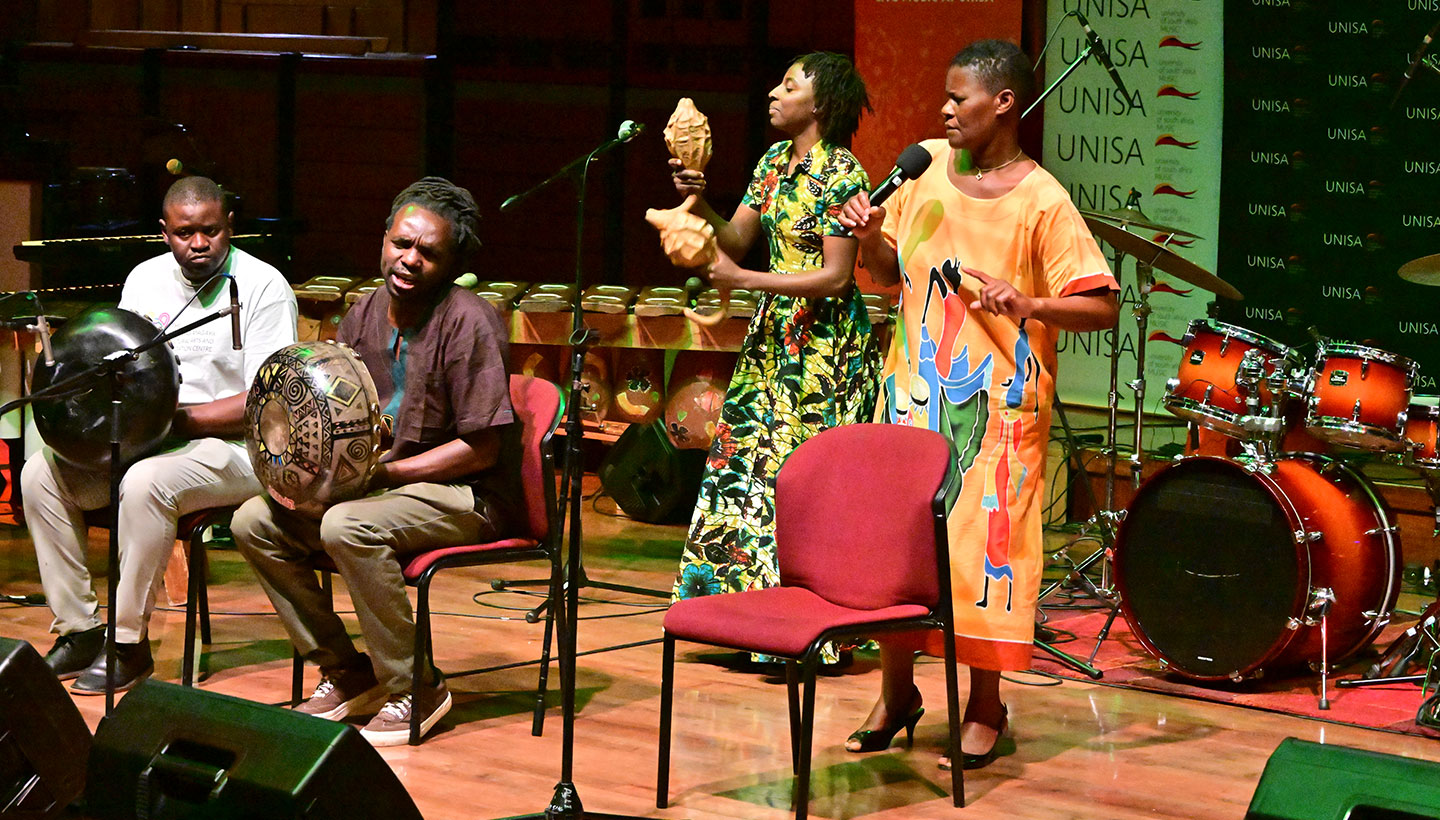
The sound of the mbira took centre stage at Unisa’s main campus.
The sound of the mbira took centre stage at Unisa’s main campus as musicians from across Southern Africa gathered for the university’s second African Music Festival, an event aimed at placing African musical traditions more firmly within the academic and cultural life of the institution.
Held over two days, the festival brought together musicians, academics, teachers and students through performances featuring the mbira, marimba, bows and percussion instruments. The programme also demonstrated how traditional African sounds continue to influence contemporary genres including jazz, Afro-fusion and other modern musical forms.
For Unisa Principal and Vice-Chancellor Professor Puleng LenkaBula, the festival is part of a broader effort to recognise African creativity, languages, cultures and knowledge systems within the university.
“We recognise the contribution of the continent, its creatives, music, languages and cultures,” LenkaBula said.
She said the university was seeking to create greater opportunities for African music within its curriculum and production spaces as part of its work to reclaim indigenous and endogenous knowledge systems.
LenkaBula said this work was also linked to efforts to confront the legacy of apartheid and colonialism.
“A way to enable us as a university and society to eradicate and overcome the tentacles of apartheid and colonialism,” she said.
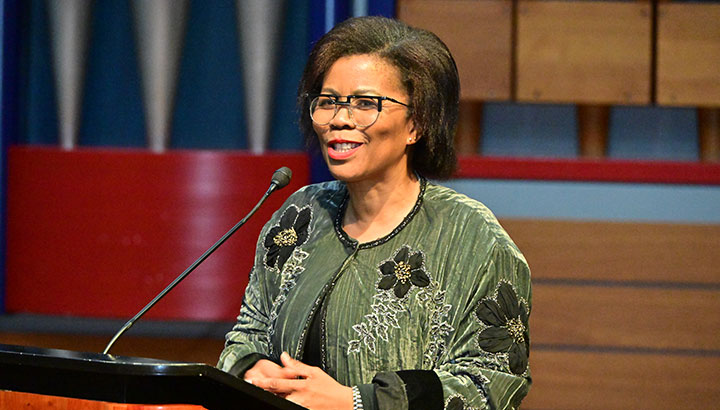
Unisa Principal and Vice-Chancellor Professor Puleng LenkaBula
The festival therefore sought to position African music as more than a performance tradition, presenting it as a source of knowledge that can be studied, taught, researched and preserved.
According to Unisa, the university has historically assessed Western music traditions while African oral musical traditions have often existed outside formal academic structures. Its current work includes efforts to document and formalise African music traditions within teaching, research and accredited qualifications, in collaboration with regional and international partners.
Acting Director of Music Professor Thomas Pooley coordinated the festival.
The opening day demonstrated the diversity of African musical traditions, beginning with Zimbabwean musician Laina Gumboreshumba, who used the Nyunga Nyunga mbira to create a reflective opening.
Gumboreshumba encouraged the audience to listen closely to the instrument, describing the performance as an invitation to use their “inner ear” to engage with its sound.
Fellow Zimbabwean musician Solomon Madhinga followed with a performance using the Mbira dzavaNdau. His music combined storytelling with reflections on history and lineage, highlighting the instrument’s connection to Zimbabwean cultural traditions.
The programme then moved into a more contemporary sound when the Totem Band, led by percussionist Mike Sibanda, brought the marimba into the performance.
The band combined marimba instrumentation with modern musical influences, performing familiar songs including Joe Mafela’s Shebeleza, Abantwana Bakho and Bruno Mars’ Just the Way You Are. The group also introduced a Zimbabwean sound through WeMancube, performed with guest artist Othnell “Mangoma” Moyo.
The first day ended with renowned guitarist Louis Mhlanga, whose performance brought together elements of Shona mbira patterns with jazz, rock and Afro-fusion.
The combination of traditional musical structures and contemporary styles illustrated one of the festival’s central themes: African musical traditions are not confined to the past but continue to evolve through new forms of expression.
The second day placed a stronger emphasis on traditional African music and instruments.
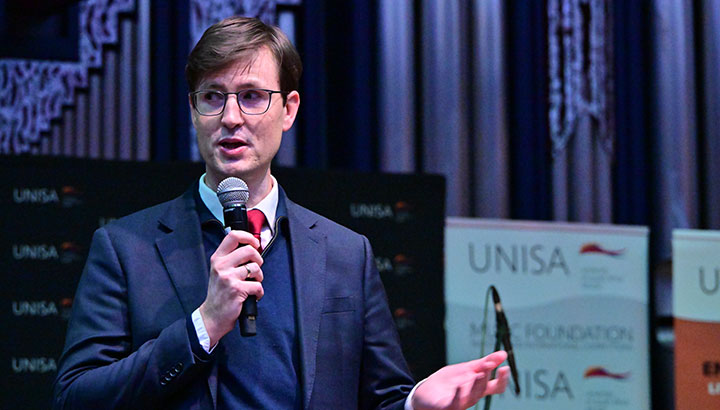
Acting Director of Music Professor Thomas Pooley
Udumu, an in-house traditional music and marimba performance group, opened the programme with music drawing on community celebrations, spirituality and traditional vocal forms.
Xhosa musician Nomapostile Nyiki and the Nyiki Band followed with a performance rooted in Xhosa musical traditions. The group used instruments including the uHadi bow and Umasengwayo, a water drum, while incorporating Xhosa clicks, storytelling and traditional dance.
Their performance demonstrated how indigenous instruments can function alongside oral traditions, movement and language to preserve cultural knowledge.
The programme then moved into a dedicated mbira showcase featuring Othnell “Mangoma” Moyo, who explored the Njari style and Matepe music. The performance highlighted the complex polyrhythmic traditions associated with Zimbabwean mbira music.
Zimbabwean mbira musician Hope Masike, who has become one of the instrument’s prominent custodians, also performed during the festival’s Women’s Month programme. Using the Nyunga Nyunga, Masike brought a softer dimension to the showcase while connecting the instrument’s traditions to themes of women’s empowerment.
Mudavanhu Magaya continued the showcase with mbira dzaVadzimu, a tradition associated with the spiritual heritage of the Shona people.
His performance of Dande explored themes of war, liberation, struggle and ancestral guidance, connecting the music to historical and cultural memory.
The festival’s programme also demonstrated the continuing movement between traditional African music and contemporary Southern African sounds.
RUmband brought together mbira and marimba in a performance that connected traditional instrumentation with a modern musical approach.
The festival concluded with South African band Freshlyground, whose performance brought together the traditional and contemporary strands running through the two-day programme.
The multi-award-winning group performed well-known songs including Doo Be Doo, Nomvula and Fire Is Low, prompting an enthusiastic response from the audience. The band also gave audiences a preview of its new material, including Jabula.
For Unisa, the significance of the festival extends beyond the two days of performances.
By bringing indigenous instruments, oral traditions, contemporary African musicians and academic discourse into the same space, the festival provides a platform for examining how African musical knowledge can be preserved while continuing to evolve.
It also reflects a broader question facing music education: how can universities ensure that Africa’s own musical traditions are not simply performed on stage, but recognised as knowledge worthy of teaching, research and formal study?
The second edition of the African Music Festival offered one answer by placing those traditions at the centre of the university’s cultural and academic space.
* By Nontsikelelo Ndebele, Communications Intern, Department of Institutional Advancement
* Photography by Shooheima Champion, Multimedia
Publish date: 2026-08-26 00:00:00.0